
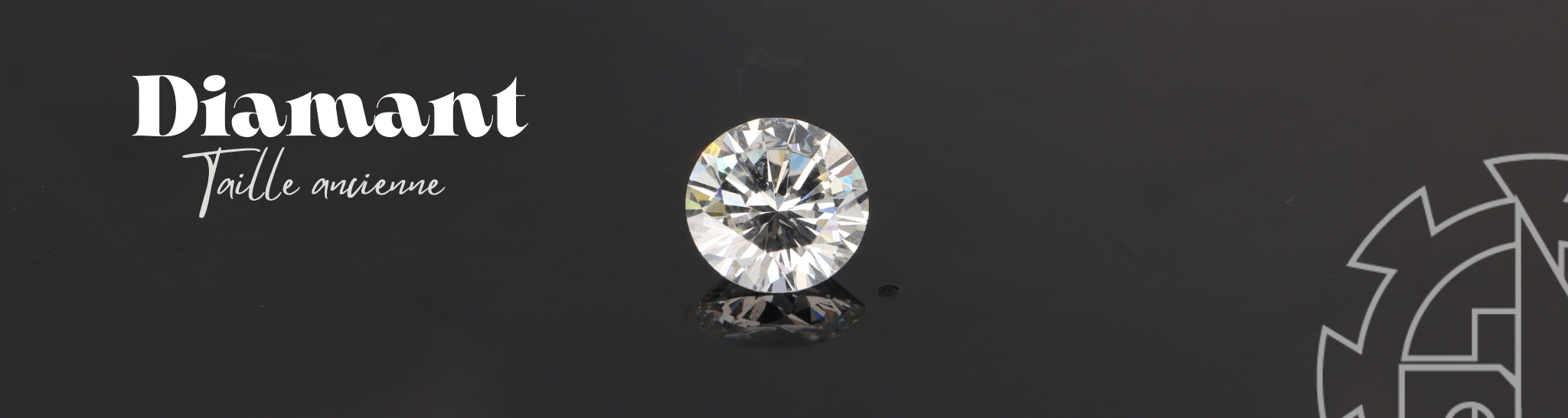
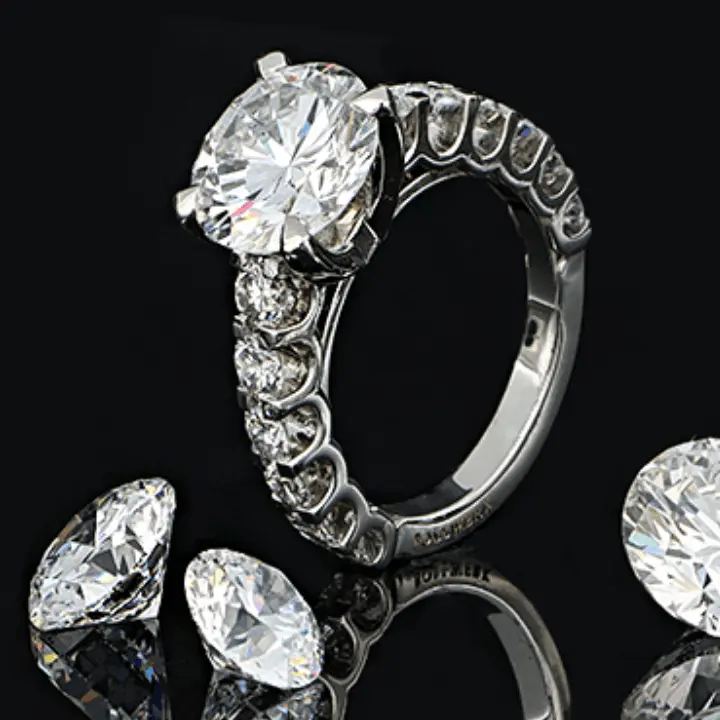
Everything you need to know about the Old Cut Diamond
Old-cut diamonds have always existed. This elegant type of diamond is perfect for romantic and nostalgic souls. But why is there a price difference compared to modern versions?

What is the origin of the old-cut diamond?
It's easy to assume that all diamonds are created equal, but the truth is that the process of manipulating this incredible mineral by humans—in other words, diamond cutting—is a long and complex story with considerable evolution. In India, diamonds had been carved using rudimentary methods for centuries, while in Europe, these precious stones began to be worked around the 14th century.
But it was around the 17th century that the brilliant cut began to take shape. It wasn't until the 20th century that the brilliant cut diamond began to solidify, culminating in the 58 facets we have today. The criteria for proportions and cutting angles are very demanding, and modern brilliant cut diamonds are graded on a scale ranging from Excellent, Very Good, and Good to Fair and Poor. Market demand is focused on modern brilliant cut diamonds of Excellent or Very Good quality.
Old-cut diamonds are not classified in this category and are referred to in gemological reports as "old brilliant cut diamonds." Ultimately, an old-cut diamond has proportions, cut angles, symmetry, and polish that are quite inferior to modern cut diamonds. The goal of these cut quality requirements is to achieve maximum brilliance, longevity, and perfection in the diamond.
From the old cut to the modern cut of the diamond
History shows that, in ancient times, diamond cutting was simply the result of skilled craftsmanship. The antique cut is the fruit of this labor. It was in 1919 that Marcel Tolkowsky conducted technical studies on the optical properties of diamonds and their reaction to light. This allowed for improvements in crown angles and the establishment of ideal measurements for diamond cutting. This model was quickly adopted by the jewelry industry. The improvements in diamond cutting were so significant that many owners of antique-cut diamonds decided to have their stones recut.
What is antique pruning?
An old-cut diamond is one that was cut in ancient times using rudimentary methods. These are distinguished by the fact that the crown and buttocks are typically cut away. Therefore, an old-cut diamond is a gemstone with less than perfect proportions. Its finish is inferior compared to today's diamonds, which are crafted using more sophisticated and expert techniques.
Old-cut diamonds are those that were cut before the beginning of the 20th century.
Given that in the Middle Ages the outer surfaces of rough stones were flattened and polished, we cannot yet speak of a cutting technique. Until the 17th century, diamonds were large, poorly finished, and of mediocre proportions. All these characteristics therefore influenced their price, whether as a diamond or as part of a piece of jewelry.
This type of cut is not well-defined either. Since Tolkowsky's research on the ideal proportions of diamonds around 1919, their evolution has been enormous. Currently, we find many different types of diamond cuts, such as: marquise, brilliant, pear, cushion, heart, princess, oval, etc.
However, more and more people are interested in diamonds with an antique cut due to a kind of nostalgic feeling and interest in this ancient craft.
Why is an old-cut diamond cheaper?
An old-cut diamond can now be recut, with good results in terms of symmetry and finish. However, approximately 20 to 30% of the material, meaning its weight, is lost. So why not opt for a minor recut instead of a complete one?
As with the famous 186-carat "Koh-I-Noor" diamond and its lack of brilliance, it was exhibited at the Crystal Palace in London in 1850 and aroused only disappointment.
The second risk associated with an old-cut diamond is its loss of character, originality, and charm compared to the original stone. Therefore, to calculate its price, you should know that the price is the same as the original old-cut diamond minus 30% of its value, according to a price and value chart published in the Diamond Report.
It is therefore essential to know the price of the cut diamond at the time of the evaluation in order to be able to define the price of the old cut diamond.

What are the types of antique diamond cuts?
Among the old diamond cuts, we find:
- The one-size cut: this is one of the earliest forms of cut, and it dates back to the 14th century. These diamonds have
only 18 facets;
- The rose cut: this cut is so named because the result resembles a rosebud due to the flat base and spherical crown of the cup. The cut shape originated in the 16th century and can have 3 to 24 facets. Primarily because of its shape, this cut was very popular during the Victorian and Georgian eras;
- The size of the old mine: In the 18th century, the cutting forms of the old mine were created. They can be compared to the contemporary cushion cut;
- The antique European cut: with its 58 facets, this type of cut can be considered the precursor to the modern brilliant round cut. This cut was developed in the 1800s and was popular during the Victorian era.
Bollwerk offers you an expert team of artisan jewelers who will be delighted to help you create a unique diamond ring in an antique or modern cut of your choice. The ring will be entirely designed and handcrafted in our workshops, and you will be able to follow every step of the process.
FAQ:
- How to recognize an antique cut diamond?
The old-cut diamond has particular characteristics. It is recognizable by its shape, finish, and very specific proportions.
Article suggestion: