




Do you love cultured pearl jewelry? But you don't know how to identify cultured pearls? In this article, you'll discover the different types of pearls, and you'll also learn how to distinguish real from fake!
Natural pearls, cultured pearls, or even dead cultured pearls—are you confused? Well, there are different types of genuine pearls for various types of jewelry. Pearls are commonly used to create earrings, necklaces, pendants, rings, and bracelets. You can find some examples of our creations on our jewelry page. Several criteria allow you to distinguish between different types of pearls when they are located deeper within the shell, such as:
color;
shape;
size;
brightness;
transparency;
luminosity.
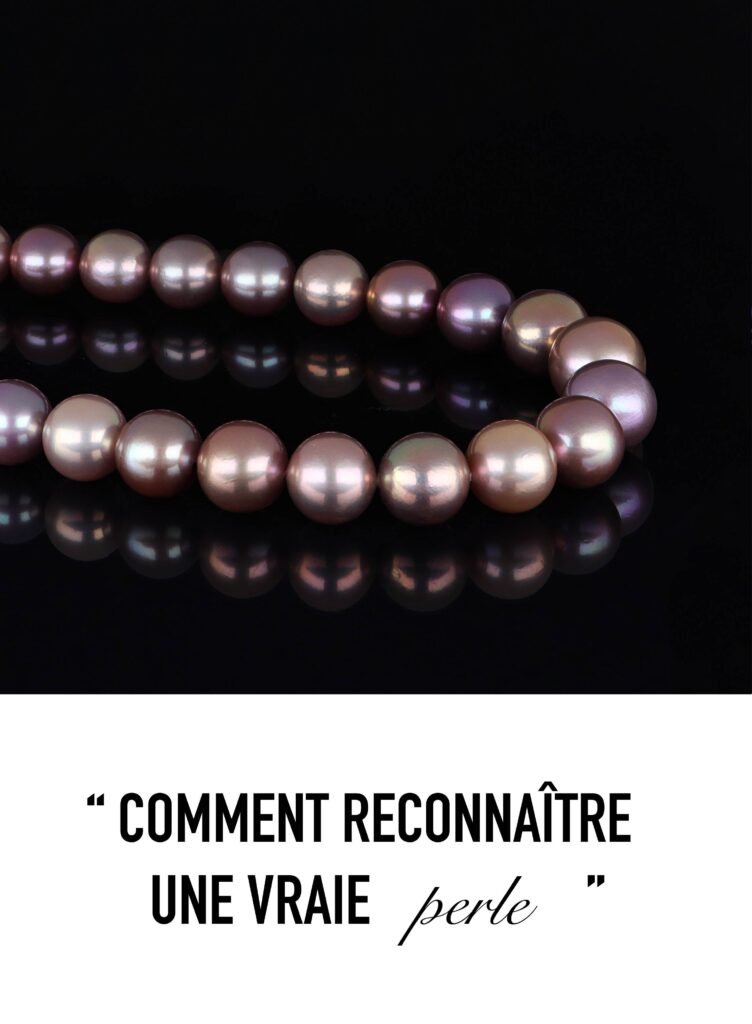
To begin, there are Japanese pearls, called Akoya pearls, which are found in China, Japan, and Vietnam. These small pearls are round and white. However, you can also find yellow Akoya pearls. There are also freshwater pearls. These are among the most beautiful pearls you can find on the market thanks to their color and size, which can reach up to 15 mm in diameter. These luminous pearls are produced in China.
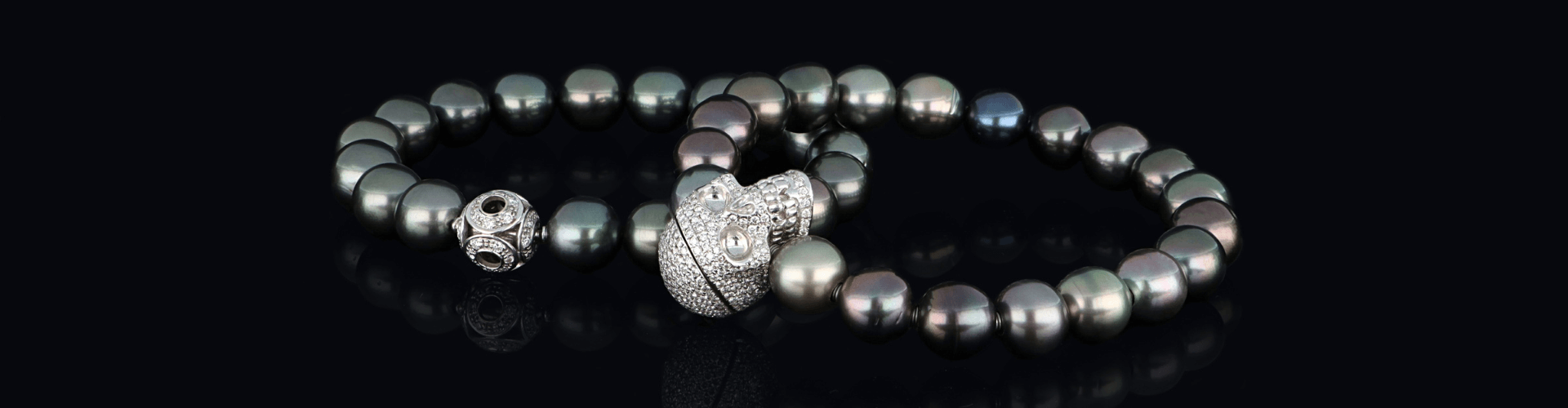
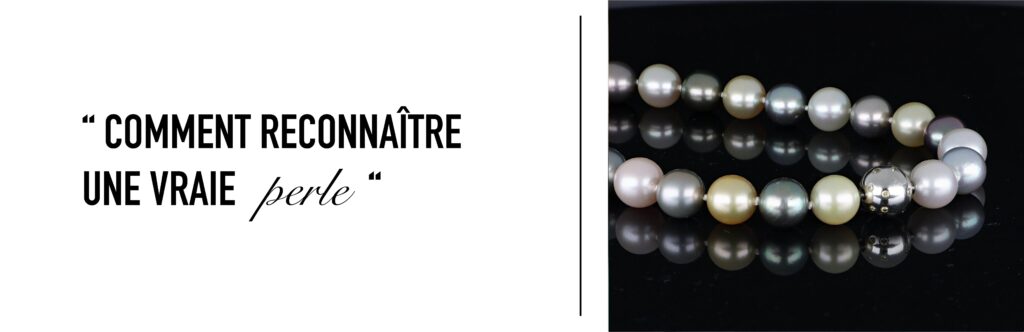
Then there are Tahitian cultured pearls, which come in a variety of colors. Tahitian pearls can be white, black, gray, blue, aubergine, or even rainbow-colored. These cultured pearls are found in Polynesia. Finally, you can also find South Sea pearls. The visual appearance of a South Sea pearl varies depending on its origin. For example, in the Philippines, you'll find golden pearls. In Australia, the pearls are white or silver. And finally, in Indonesia, you'll have the chance to discover yellow, golden, or even champagne-colored pearls.
There are several ways to verify the authenticity of a cultured pearl. Here are a few tips to help you make a more informed decision.
A very simple way to tell if a pearl is real or artificial is by its temperature. Natural pearls feel cool to the touch after a period of disuse, although their temperature gradually increases upon contact with the skin. Artificial pearls, on the other hand, feel at room temperature and heat up much more quickly.
If you rub one pearl against another, and you notice a slight resistance, this is usually characteristic of real pearls; surface pearls are completely smooth and this friction is not noticed.
Checking the texture is perhaps one of the easiest ways to tell if a pearl is real or artificial. Natural pearls are distinguished from fakes by their texture. If you rub your teeth against them, you'll notice that real pearls are rough, while fake ones are much softer and smoother. And if they're of poor quality, the surface layer of nacre will peel off like nail polish.
Look at the shape and surface; a natural pearl will never be perfectly symmetrical and round. Natural pearls often have small imperfections and variations, while artificial pearls have a completely uniform luster.
If the beads are drilled, look at the edge of the drill hole. If you see shards of plastic or glass around the hole, this indicates that the beads are fake.
Generally, artificial pearls are lighter than natural pearls, which become heavier, although this is difficult to appreciate when the pearls are very small.
Each time you perform tests, to be on the safe side, we advise you to conduct several trials, never limiting yourself to just one. When the imitation pearls are not of high quality, these tests are generally effective, as the differences are often very obvious. However, when artificial pearls are of high quality, they can be misleading. Therefore, if you perform the tests yourself and still have doubts, the best course of action is to consult an expert, such as our jeweler. Our jewelry workshop is equipped with tools adapted for this type of analysis, allowing us to perform more in-depth tests (X-ray testing, refractometer, etc.) to ensure you receive a definitive result!
As you may have guessed, there are several types of cultured pearls that can be found all over the world. They are used to create jewelry, such as authentic white pearl necklaces. To purchase this type of piece, we recommend visiting one of our jewelry stores. You can visit our store in Mulhouse or Belfort, depending on your location. The cultured pearl jewelry we offer comes with a certificate of authenticity.
There is no difference between cultured pearls and freshwater pearls. It is extremely rare to find natural pearls on the market; the majority of pearls sold are cultured.
The price of a cultured pearl depends on many factors (size, color, shape, etc.), and can therefore vary considerably. However, it's important to know that a wild pearl will always be more expensive than a cultured pearl.
To determine if a pearl is real or fake, gently rub it on a sharp area of your tooth. If the contact feels smooth, the pearl is definitely fake. A real pearl will have a rough texture.