

Pearls have been used for centuries. In the 1st century BC, women in Rome sewed pearls onto their dresses, while noblemen placed strands of pearls around their horses' necks. Pearls also played a central role in the conflict between Cleopatra and Mark Antony and appeared in religious texts throughout the Arab world. Today, pearl jewelry remains highly sought after by women worldwide. However, pearls are precious only if they are genuine. If you are interested in purchasing pearl jewelry, it is important to know how to distinguish between an authentic pearl and a fake one. In this article, we will explain how to tell a real pearl from a fake.
The different types of beads:
If you appreciate fine jewelry, whether it's a Messika diamond necklace or a cultured pearl necklace, you should be able to distinguish the real from the fake. First, it's important to know that both natural and cultured pearls are genuine. However, there is a difference between them. In the formation of both types of pearls, a mollusk (oyster) creates the pearl by coating a foreign body with nacre, which then becomes part of its shell.
However, if the insertion of the foreign body is performed by a human being, then it is called a cultured pearl. On the other hand, if the pearl is entirely produced naturally without human intervention, then it is called a natural pearl. Natural pearls are, of course, much rarer than cultured pearls, and are therefore automatically more expensive.
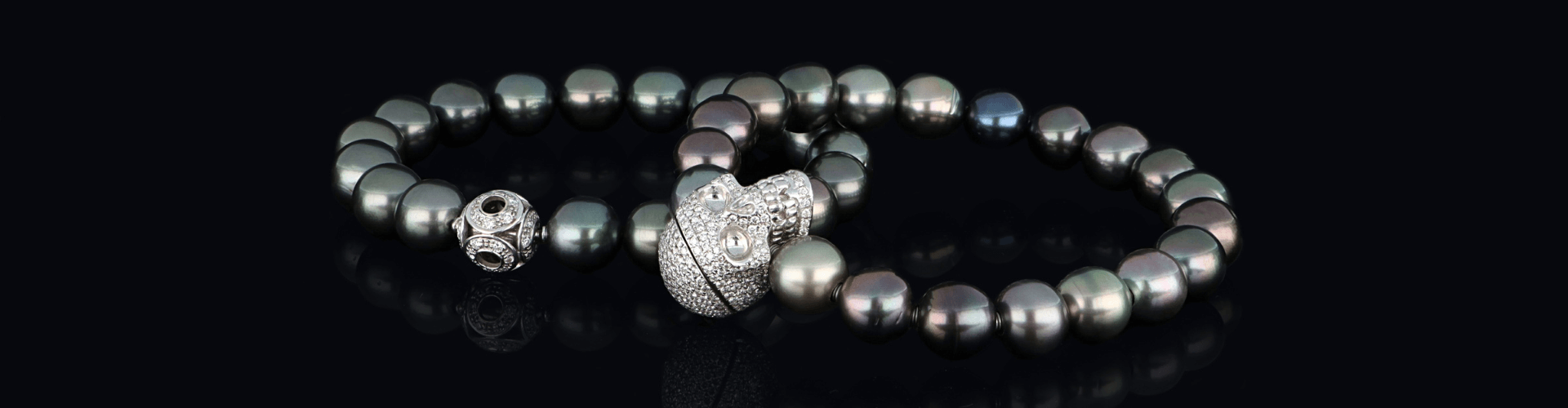
Cultured and natural pearls come in a variety of colors. Ivory, mother-of-pearl, champagne, pink—the possibilities are vast for creating jewelry with these precious elements. It's also worth noting that Tahitian pearls are black, resulting in truly unique pieces. For your information, freshwater pearls are cultured pearls produced in a lake or river.
Fake pearls
As for imitation pearls, they are often made of ceramic, glass, or plastic. Imitation pearls are frequently used to make costume jewelry.
Fake pearls closely resemble real pearls, but they are obviously much more affordable because their quality is lower. When buying pearl jewelry, be careful not to mistake fake pearls for real ones. To avoid this confusion, there are various tests to determine if a pearl is genuine.
Criteria for recognizing true pearls
To determine if a pearl is real or fake, you must pay attention to these different criteria.
Size and symmetry
Fake pearls will look exactly the same, while real pearls will have slight variations in size and symmetry. This is because real pearls are formed in nature, so it's normal for them to have some imperfections.
Glow
The luster of a pearl is what makes it so unique. Real pearls shine brightly when exposed to light. If a pearl doesn't shine, it's fake. However, this isn't the best test for determining if a pearl is authentic. Some imitation pearls are designed to be as brilliant as real pearls. Shiny imitation pearls often have a dull luster, while real pearls have a clear luster, but it's difficult for the untrained eye to distinguish between the two.
Weight
Hold the pearls in your hand to feel their weight. Fake pearls are usually lightweight, so you shouldn't feel any significant weight when you hold them. However, real pearls have some weight to them, so if they're heavier than you expected, they're probably real.
Hole
A hole must be drilled in each pearl to create certain types of jewelry, such as pearl necklaces. Examine the pearls closely to find the drill hole. If the pearl is genuine, there should be a ring around the drill hole. If there is no ring around the drill hole, the pearl is likely fake.
Furthermore, genuine pearls will have clean, well-defined edges, while imitation pearls often have rough edges. There is also often chipped paint around the hole of an imitation pearl. This occurs when imitation pearls begin to rub against each other.
Temperature
Hold the pearls in your hand to easily feel their temperature. Faux pearls will generally remain at room temperature, while real pearls will not. Initially, a real pearl should feel slightly cool to the touch and should begin to warm up slowly when you hold it in your hand
The bite test
The final step in determining whether a pearl is real or fake is to perform the bite test. Place the pearl between your upper and lower teeth and gently bite down on it. You can also gently rub the pearl against the outside of your teeth. Either way, pay attention to how the pearl feels when it comes into contact with your teeth.
Real pearls are made of nacre. And nacre often feels like sand. So, if it feels like you're rubbing sandpaper against your teeth, it means the pearl is genuine.
When imitation pearls are of poor quality, these tests are generally effective, as the differences are often very obvious. However, when artificial pearls are of high quality, they can be misleading.
So, if you do the tests yourself and still have doubts, the best thing to do to find out if a pearl is real or artificial is to consult an expert.
Jewelry testing
If you still have doubts and can't determine whether the pearls in your jewelry are real or fake, we advise you to visit a jeweler and ask a specialist for their opinion. They can perform much more complex tests such as:
- The refractometer: if you want to know for sure whether a pearl is authentic or not, this test measures the material it is made of according to its refractive index;
- The X-ray test: with this test, you can know with complete certainty whether your pearls are real or not.
One last piece of advice: don't be alarmed if the pearls have overly bright colors; nowadays, cultured pearls are colored with pigments of every imaginable color, and a color that doesn't look natural doesn't mean the pearl is artificial.
FAQ
How can you tell if they are real pearls?
Genuine natural pearls or cultured pearls do not have a perfect shape or surface. They often have some imperfections. Artificial pearls are completely smooth and round.
How do you get pearls appraised?
To have pearls or a pearl necklace appraised, it is best to go to a French gemological laboratory or a trusted jeweler.
Article suggestion: