
Watch complications
A watch complication refers to any additional mechanism in a watch beyond simply displaying the hours and minutes . In other words, these are the extra functions integrated into a watch movement that offer specific features or additional displays. Discover the different watch complications, their specific characteristics, and their uses in our article !
1. Horological complications related to time measurement
a. Chronograph
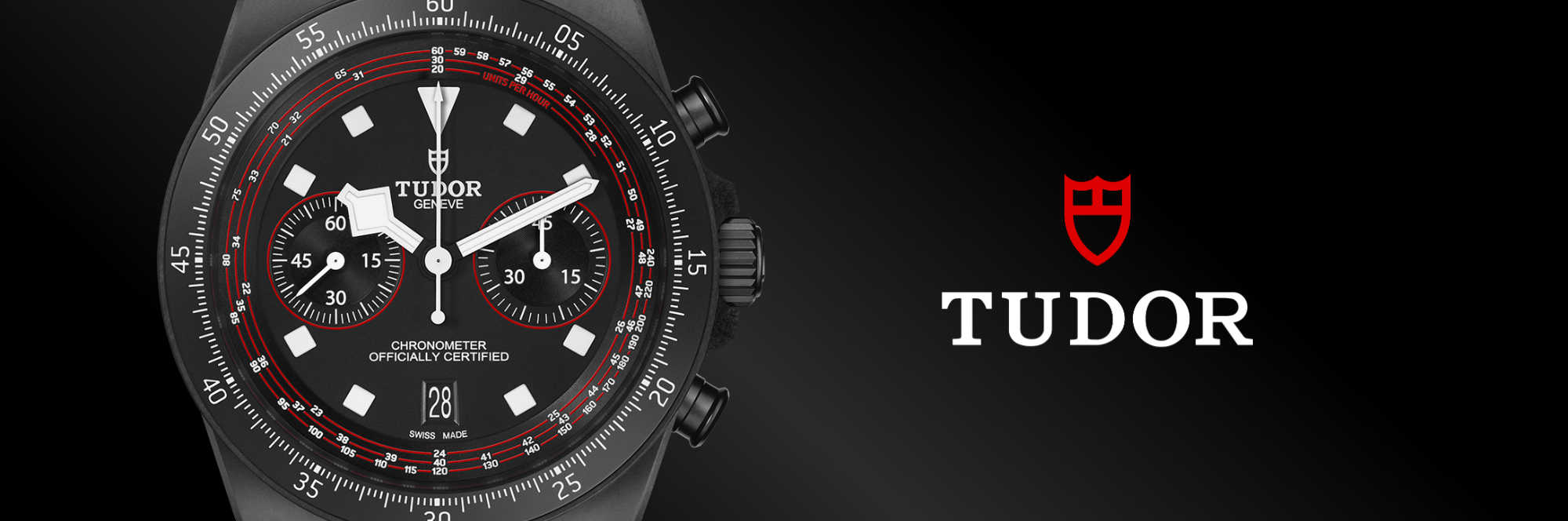
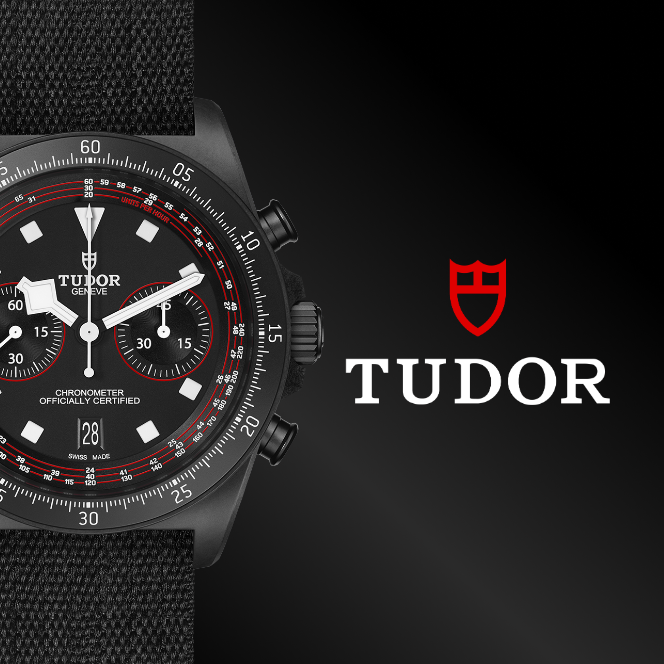
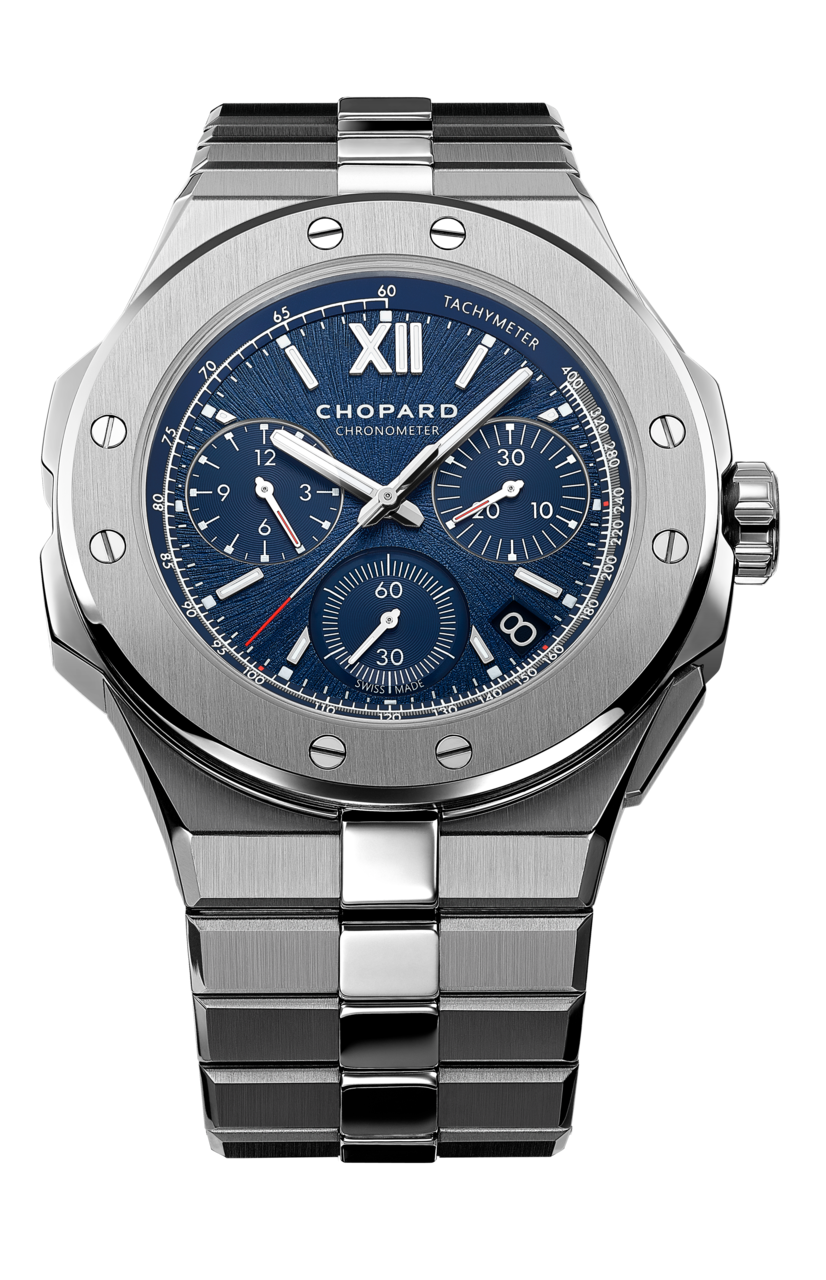
A chronograph is a watch complication that allows the measurement of specific time intervals, functioning like a stopwatch built into a timepiece. Unlike a simple watch that only tells the time, a chronograph allows you to start, stop, and reset a mechanism to time events. They are often used to time sporting events, competitions, or any other event where precise timing is essential.
There are several types of chronographs. First, there is the simple chronograph , which measures a single time interval . There is also the split-seconds chronograph , which allows you to time two simultaneous events that are offset in time , thanks to a second chronograph hand that can be stopped and restarted independently of the first.
And finally, the flyback chronograph, which allows you to reset the chronograph and restart it instantly with a single press of a button instead of three separate steps (stop, reset, start).
b. Perpetual/Annual Calendar
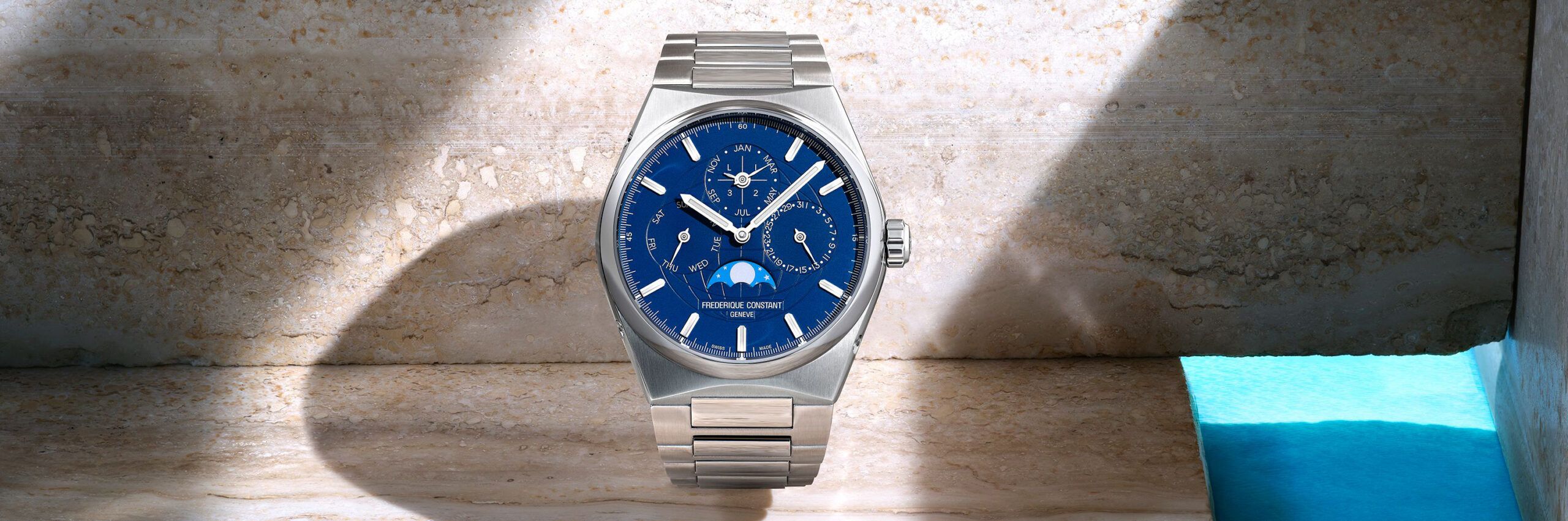
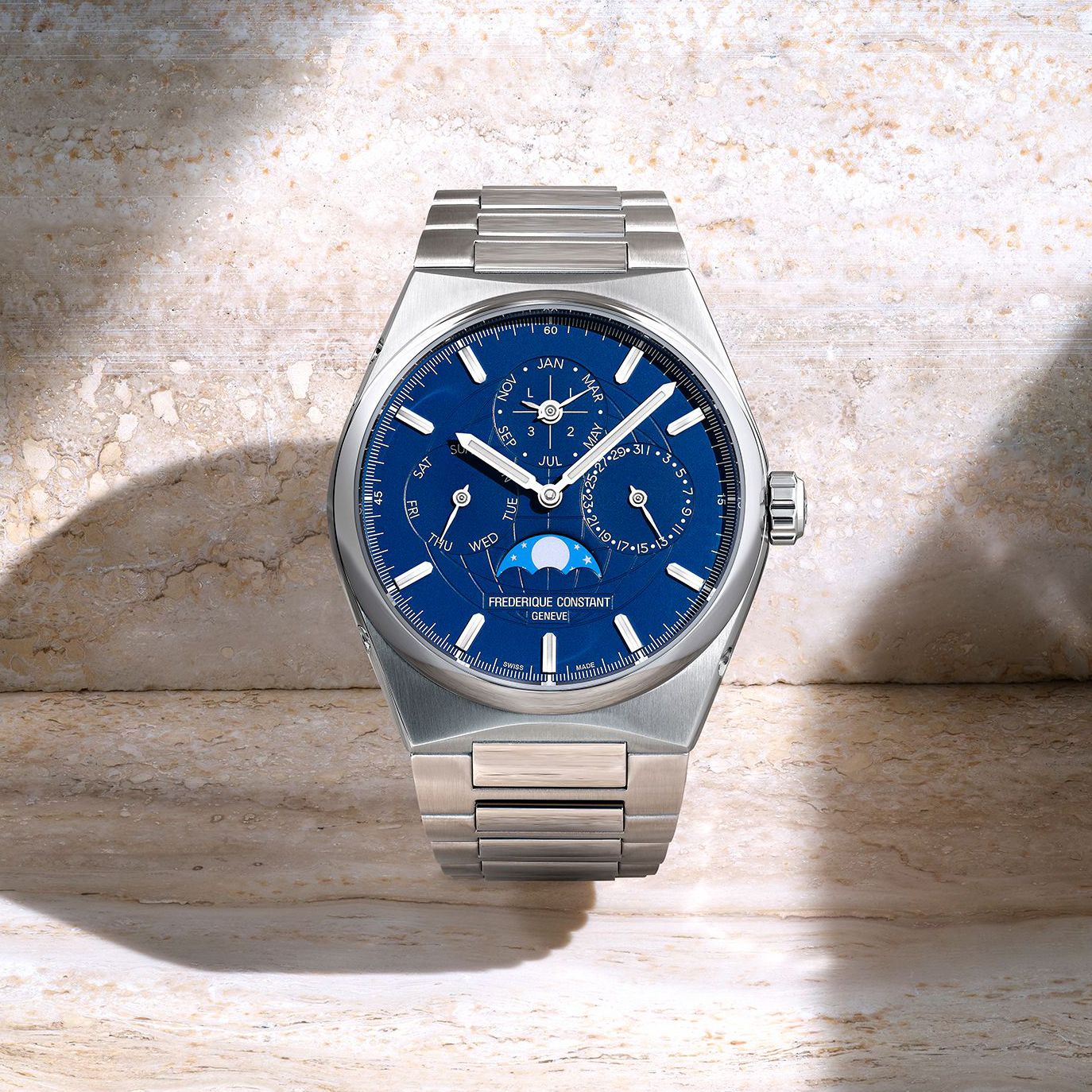
Perpetual calendars and annual calendars are two types of watch complications that allow a watch to display the date with high accuracy, but they differ in their complexity and operation.
Perpetual Calendar
- How it works : A perpetual calendar is a horological complication that automatically accounts for months of varying lengths (28, 29, 30, or 31 days) and leap years. This means the watch automatically adjusts the date, including February 29th every four years, without manual intervention.
- Complexity : This is one of the most complex complications in watchmaking, requiring a sophisticated mechanism that takes into account the four-year cycle (the leap year cycle) and the variations of the Gregorian calendar.
- Maintenance : Once set, a perpetual calendar will only need to be adjusted in 2100, because that year, although divisible by 4, will not be a leap year according to the rules of the Gregorian calendar.
Annual Calendar
- How it works : An annual calendar is a complication that can also distinguish between 30- and 31-day months, but it requires manual correction once a year, at the end of February. Unlike a perpetual calendar, it does not account for leap years, which means that every year on March 1st, the date must be manually adjusted.
- Complexity : Although simpler than the perpetual calendar, the annual calendar remains an advanced complication, requiring a mechanism to recognize months of different lengths.
- Maintenance : It requires an annual intervention to adjust the date in February, but remains easier to maintain than a perpetual calendar.
c. GMT - Greenwich Mean Time
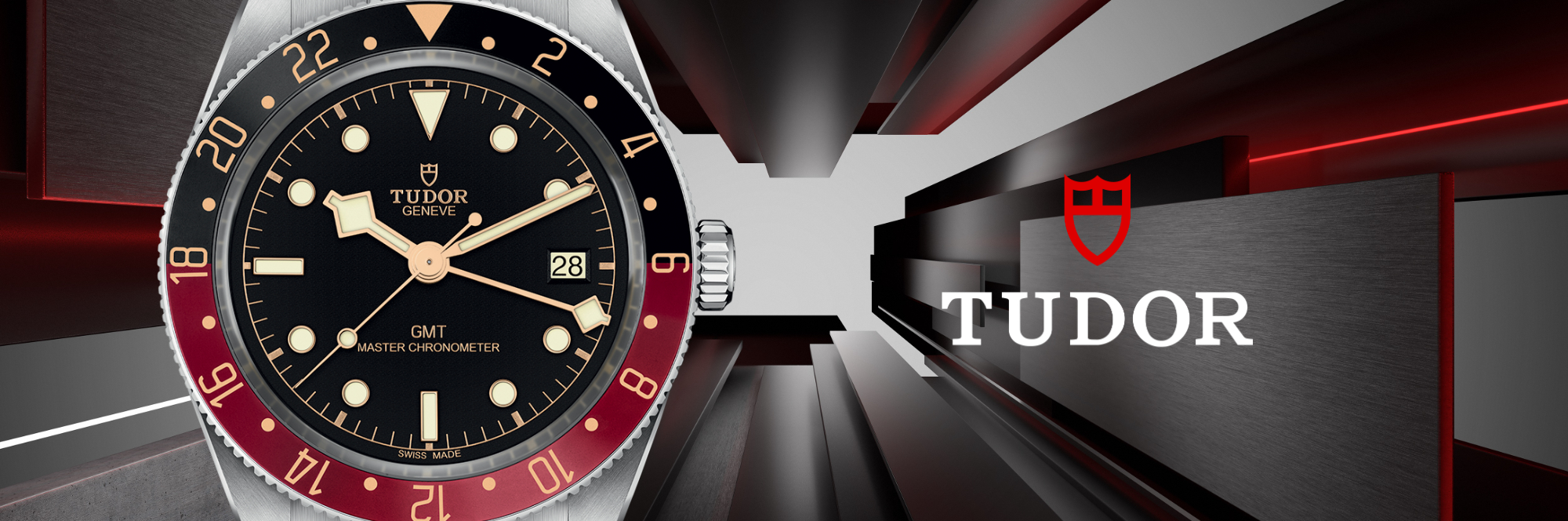
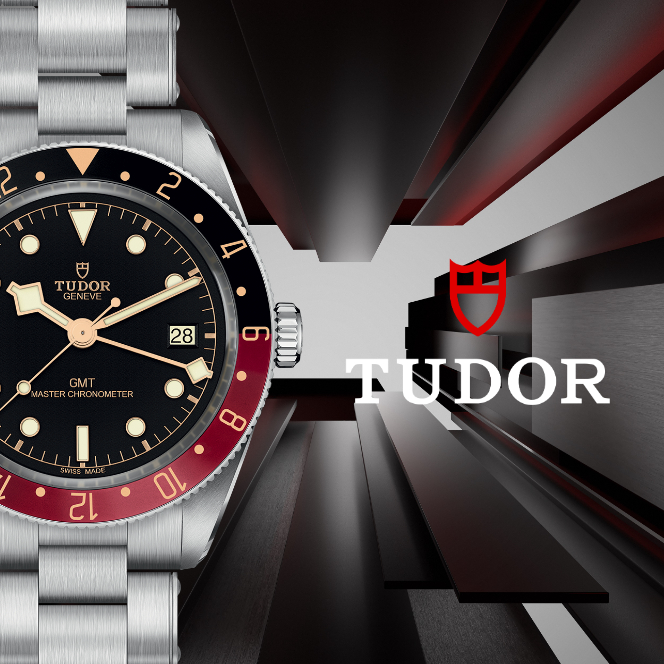
The GMT (Greenwich Mean Time) complication is a watch feature designed to simultaneously display the time in multiple time zones. It is particularly useful for frequent travelers or those who work with people in different time zones.
How the GMT complication works
- Local time and GMT : A watch with a GMT complication displays local time in the traditional way (using the hour, minute, and second hands), but it also has an additional hand (often a different color) to indicate the time in a second time zone. This GMT hand completes a full rotation of the dial in 24 hours instead of the usual 12 hours.
- Rotating bezel : Some GMT watches are equipped with a 24-hour graduated rotating bezel, which allows you to track a third time zone. By rotating the bezel to align a new time zone with the GMT hand, you can read the time in that zone directly on the bezel.
Originally, the GMT complication was designed for pilots who had to keep track of multiple time zones, including GMT, which was the standard for air navigation.
Types of GMT watches
- GMT with independent hour hand setting : Some models allow you to set the local time without affecting the GMT hand, which is very convenient for travel.
- GMT “True GMT” : In this type of watch, the GMT hand can be set independently of the hour hand, allowing for quick adjustment when changing time zones.
The GMT complication is a useful and elegant feature for those who need to keep track of the time across multiple time zones. It embodies the fusion of functionality and style in a watch, offering a practical tool for international travelers and professionals while adding a touch of technical sophistication.
d. The power reserve
The power reserve is a horological complication that indicates how long a watch can run before needing to be wound. It is particularly useful in mechanical watches, where the watch must be wound manually or via an automatic rotor that uses the movements of the wrist.
How the power reserve complication works
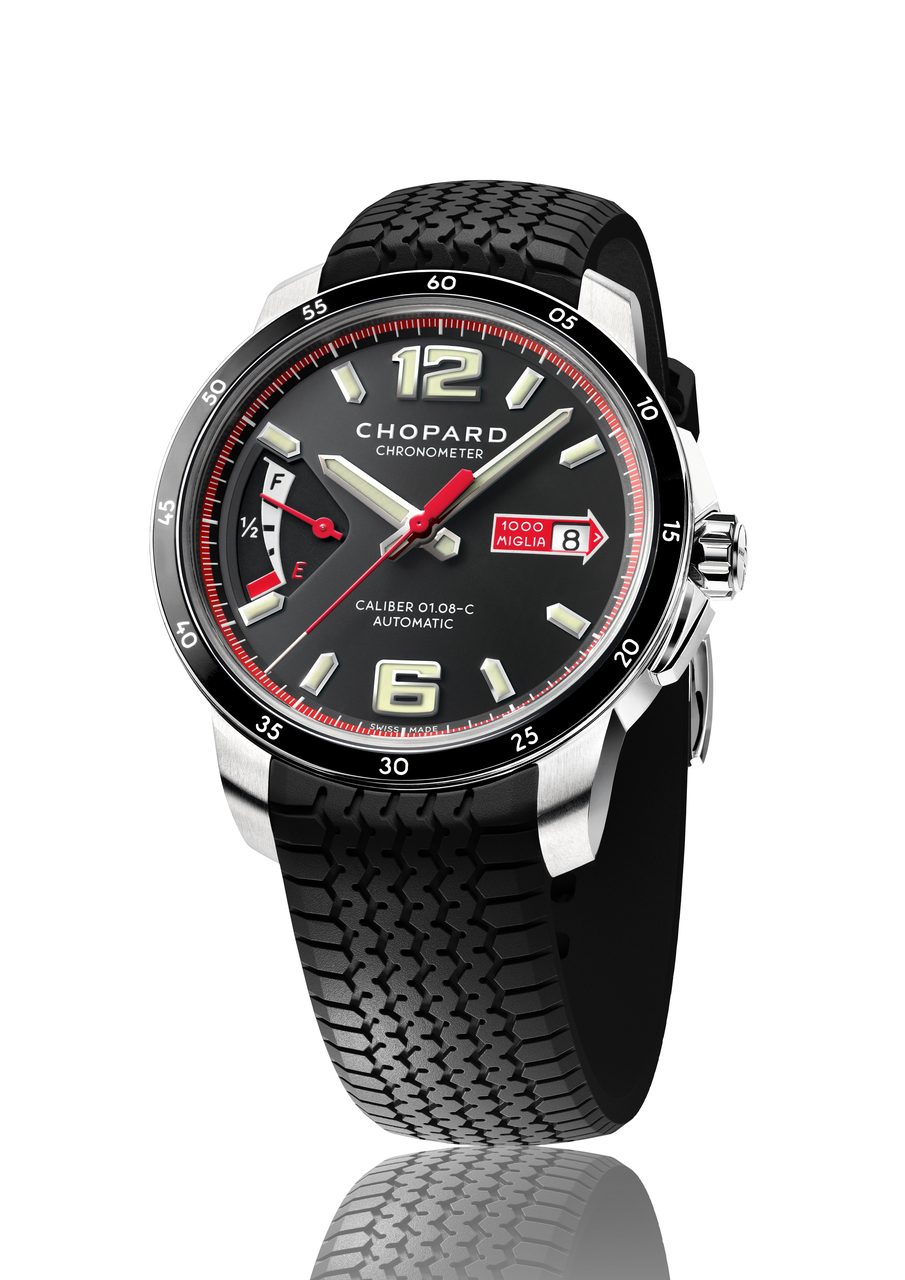
- Indicator : This takes the form of a subdial or a specific hand on the main dial that shows the amount of energy remaining in the watch's mainspring. When the watch is fully wound, the indicator points to an area corresponding to the maximum running time. As energy is consumed, the hand moves to signal that it is time to wind the watch again.
- Purpose : This allows the owner to know when the watch needs winding, particularly in manual mechanical watches. It helps avoid unexpected stops and makes winding easier.
The power reserve indicator , like the one found in Chopard Mille Miglia models with "Full" and "Low" indicators, shows the remaining energy level in the movement, alerting the wearer when the watch needs winding. The power reserve complication is a practical feature for ensuring efficient energy management of the watch.
On models like the Chopard Mille Miglia, this complication is not only useful, but it also integrates harmoniously into a motor racing-inspired design, offering a balance between performance and elegance.
2. Astronomical complications: the phase of the moon
The moon phase is a horological complication that displays the current phase of the moon as it appears in the sky from Earth. It is a complication that is both aesthetically pleasing and poetic, and highly valued in the world of watchmaking.
How the moon phase complication works
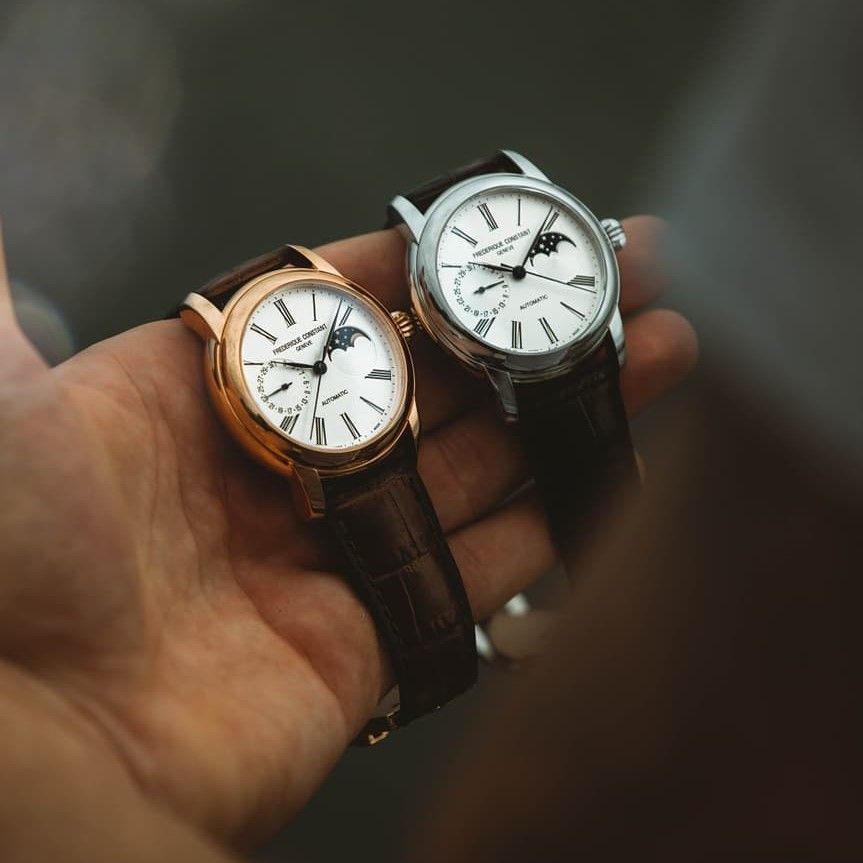
- Lunar cycle : The Moon follows a 29.5-day cycle called a "lunar month," which includes the different phases: new moon, waxing crescent, first quarter, full moon, last quarter, and waning crescent. A moon phase complication in a watch reproduces this cycle.
- Mechanism : Most moon phase watches use a rotating disc depicting two moons (to balance the mechanism). This disc rotates slowly to correspond with the lunar cycle. A small window on the watch dial allows the wearer to see the current phase of the moon. The mechanism advances one increment every 24 hours to remain synchronized with the actual lunar cycle.
Types of Moon Phases
- Classic Moon Phase : Shows only the phase of the Moon visible from Earth, indicating the portion illuminated by the Sun.
- Astronomical Moon Phase : More precise, this complication takes into account the exact 29.53-day cycle, thus reducing display errors to approximately one day every 122 years. It is particularly complex to produce.
The moon phase is often incorporated into luxury watches, offering a refined visual element that adds a touch of poetry and sophistication to the dial. But historically, knowing the moon's phase was useful for various activities, such as navigation, agriculture, or fishing, where nighttime light could be a key factor. Today, the moon phase is primarily appreciated for its charm and symbolism.
3. Complications related to time regulation: the tourbillon


The tourbillon is one of the most famous and prestigious horological complications, invented in the early 19th century by the Swiss watchmaker Abraham-Louis Breguet. The tourbillon was designed to improve the accuracy of mechanical watches by compensating for the effects of gravity on the regulating mechanism, particularly the escapement and balance wheel.
- Basic problem : In a mechanical watch, the balance wheel and escapement are the components that regulate time. When a watch is in a fixed position, gravity can cause slight imbalances in these components, which can affect the accuracy of the timekeeping.
- The tourbillon solution : The tourbillon places the escapement and balance wheel in a rotating cage that completes a full revolution, typically in one minute. By rotating continuously, the tourbillon effectively cancels out the effects of gravity, as all possible positions are regularly traversed. This reduces timing errors caused by gravity.
Types of Swirls
- Classic tourbillon : The mechanism rotates on a single axis, usually in one minute, which is the most common.
- Flying tourbillon : Here, the tourbillon cage is mounted on only one side, creating the impression that the tourbillon is floating without any visible support. This type of tourbillon is considered more complex to manufacture.
- Multi-axis tourbillon : A tourbillon that rotates on two or three different axes, offering even more complete compensation for the effects of gravity.
- Tourbillon carousel : A variation where the tourbillon cage rotates at a different speed than the escapement, creating a unique visual effect.
Today, the tourbillon is primarily appreciated for its beauty and the demonstration of watchmaking expertise it represents. Watching a tourbillon in motion is a fascinating experience for watch enthusiasts.
4. Various and innovative complications: skeleton watches
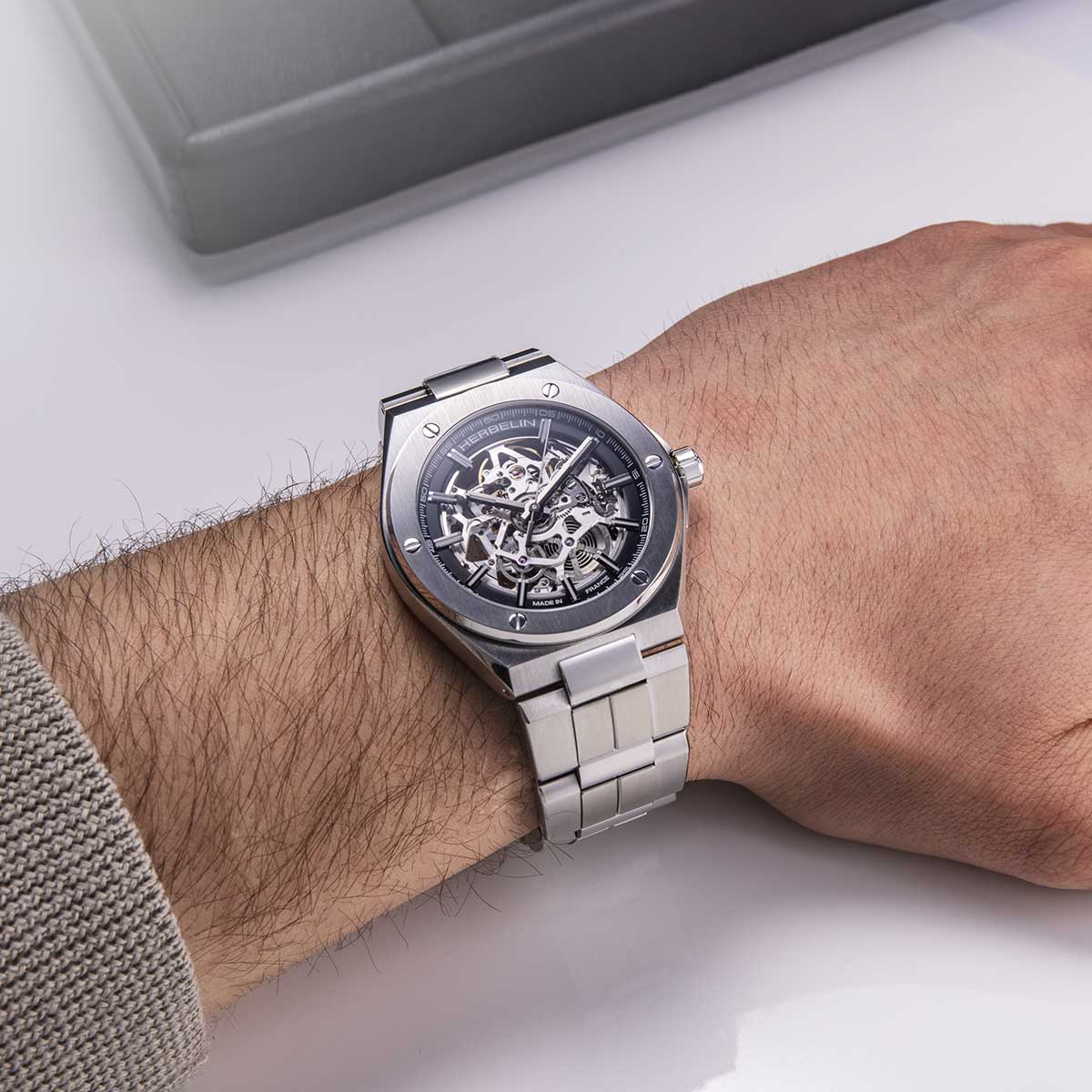
Skeleton watches are timepieces where the internal movement is exposed , allowing a view of the mechanical components in action. This style of watch, often considered a masterpiece of horology, combines a bold aesthetic with technical expertise, highlighting the complexity of a watch's internal mechanisms.
Skeleton watches were born from watchmakers' ambition to showcase their craftsmanship. The idea is to transform a mechanical watch into a functional work of art, where every detail of the mechanism is highlighted. The first skeleton watches date back to the 18th century, but they became popular in the 20th century with advancements in manufacturing techniques and the growing appreciation for complex mechanical timepieces.
Other features found on our watches are also horological complications, although we don't usually notice them. For example, thedate display, which shows the day of the month, often using a small window or aperture to facilitate calendar management, is a horological complication.
At Tudor, an example of a date display is the Tudor Black Bay Fifty-Eight. This model, while primarily known for its design inspired by historical dive watches, also features a small date window at 3 o'clock, with a date disc and aperture that blends seamlessly into the dial. This aperture is often accompanied by a sapphire crystal magnifying lens, also known as a "Cyclops," to enhance date legibility.
Horological complications are the very essence of watchmaking art and engineering, reflecting the expertise, innovation, and passion that drive this world. Each complication, whether a chronograph, perpetual calendar, tourbillon, or moon phase, adds a unique dimension to the watch, combining utility, complexity, and aesthetics. They transcend simply telling the time to offer a refined experience that blends technical precision with visual beauty.
Owning a watch with complications is much more than just a matter of time; it's a celebration of time itself, a way to connect with the history and evolution of watchmaking. For enthusiasts and collectors, these complications represent not only technical feats but also miniature works of art, reflecting a harmonious blend of tradition and innovation.
In short, horological complications are the epitome of timekeeping mastery, embodying elegance, precision, and inventiveness in a constantly evolving world. We would be delighted to welcome you to one of our jewelry stores in Mulhouse, Belfort , or Basel to present our watches and their associated horological complications.
FAQ on Watch Complications
1. What is a watch complication?
A watch complication refers to any function of a watch beyond simply displaying hours, minutes, and seconds. Common examples include calendars, chronographs, moon phases, and the GMT function.
2. What is the most common complication?
The chronograph, which allows you to time events, is one of the most widespread complications. It is appreciated for its functionality and sporty aesthetic.
3. What is a perpetual calendar?
A perpetual calendar is a complication that automatically takes into account months of different lengths and leap years, always displaying the correct date without requiring manual adjustment, and this for several decades.
4. What is the function of the GMT complication?
The GMT complication allows you to follow the time in a second time zone, thanks to an additional hand that rotates over 24 hours, often accompanied by a graduated bezel.
5. What is a tourbillon watch?
The tourbillon is a complication designed to improve accuracy by compensating for the effects of gravity on the watch's movement. The regulating mechanism (escapement and balance wheel) rotates within a rotating cage.
6. Why is the power reserve useful?
The power reserve indicator shows how long a watch can run before needing to be wound. This allows for efficient management of the remaining energy, especially on mechanical watches.
7. What is a skeleton watch?
A skeleton watch exposes the internal mechanisms by cutting away the movement and removing parts of the dial. This allows the moving components to be seen while maintaining functionality.
8. How does the moon phase function work on a watch?
The moon phase complication shows the current phase of the Moon (new moon, crescent, full moon, etc.) via a rotating disc on the dial, reproducing the 29.5-day lunar cycle.
Article suggestion: