
What is the difference between steel jewelry and titanium jewelry?
Humans have been using metals for a very long time. Over time, the metals chosen for forging and designing jewelry have been incredibly diverse. The discovery of gold and silver dates back well before the year 0. But the world of jewelry isn't limited to precious metals. In fact, non-precious metals are also widely used, particularly for creating jewelry for people with allergies.
And it must be said that stainless steel and titanium are two of the most commonly used metals for making jewelry. Even though base metals are not as expensive as precious metals, they are cast and shaped to create very beautiful jewelry that can sometimes feature natural pearls or crystals.
But what are the differences between steel and titanium jewelry? The jewelers at Bollwerk will answer that question in the rest of this article!
Metals for jewelry
Many different metals exist, but only a few are used to make jewelry. Gold, silver, and platinum are considered precious metals. Therefore, they naturally have a higher value than non-precious metals. In other words, any jewelry made with non-precious metals will necessarily be less expensive.
But it's important to know that precious and non-precious metals are sometimes mixed to create alloys of different colors, or to make them more durable. In the world of jewelry, you'll often find titanium and stainless steel pieces. To help you make an informed choice, we'll explain the differences between titanium and steel.
Stainless steel jewelry
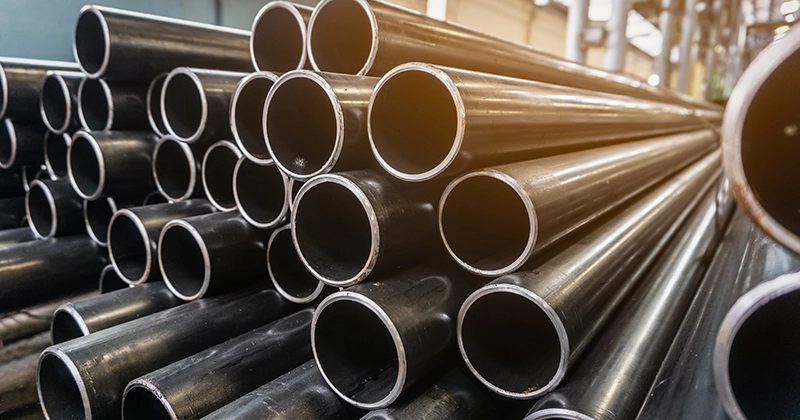
Stainless steel, and surgical stainless steel in particular, is the most popular metal used to make both classic and body jewelry. It also has several biomedical properties, but why? And what makes stainless steel such an excellent material for this type of jewelry?
The main reason is that surgical steel resists corrosion, even when in contact with bodily fluids. This property makes it perfectly safe for piercings, for example. Furthermore, it is much more economical to manufacture jewelry from stainless steel than from titanium.
Stainless steel is a strong metal used to make watches and jewelry. It's worth noting that stainless steel jewelry is highly scratch-resistant and closely resembles silver jewelry. The advantage of steel, and especially surgical steel, is that it's hypoallergenic. In this sense, steel jewelry doesn't cause allergies or itching. It's a good choice for people with sensitive or highly reactive skin.
Titanium jewelry
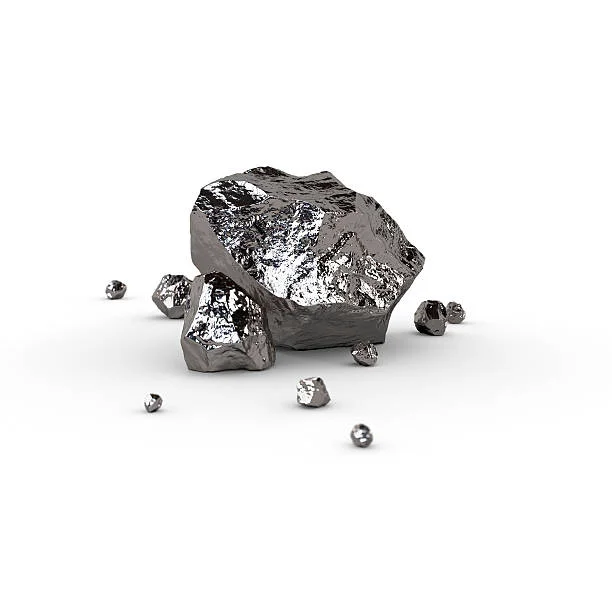
Titanium is a lustrous gray transition metal that is low in density but incredibly strong. It has high resistance to corrosion and chlorine. To create jewelry, titanium can be mixed with other materials such as iron or aluminum. The goal is to design alloys that are both lightweight and robust. Indeed, titanium has immense corrosion resistance and also a higher strength-to-density ratio than any other metallic element.
Titanium is a metal as strong as steel, but with a lower density. For many reasons, it's the perfect metal for jewelry making. To begin with, it's an inert metal, making it the most hypoallergenic material for creating jewelry to be worn on the face or body. It's strong and lightweight, which makes it more malleable for shaping different styles of pieces.
Furthermore, titanium has very low electrical and thermal conductivity. Because more and more people are allergic to metals, titanium has quickly become the ideal metal for creating jewelry. Titanium jewelry is very durable. In fact, it doesn't corrode or rust. This is why titanium jewelry is slightly more expensive than stainless steel jewelry. But it is obviously still much less expensive than gold, silver, or platinum jewelry.
Titanium jewelry or steel jewelry?
Titanium is a metal with many qualities. Although less popular than gold or silver, titanium jewelry is becoming increasingly sought after. This metal is 100% hypoallergenic, making it suitable for anyone with sensitive skin. Titanium jewelry can be a good alternative to silver jewelry.
Titanium is a strong, lightweight, and comfortable material, making it particularly suitable for people with very active lifestyles. Furthermore, titanium has excellent resistance to oxidation and retains its shine better than stainless steel. Titanium jewelry is also resistant to deformation and scratches.
This is why titanium is highly valued for the design of engagement rings and wedding bands for both women and men, as these are pieces of jewelry meant to be worn for a lifetime. It's a good alternative if you can't afford gold, silver, or platinum wedding bands.

Caring for titanium jewelry
Titanium jewelry is very durable and doesn't require special care. However, to keep your jewelry looking its best, it's important to clean it occasionally. To clean titanium, you can use warm water, soap, and a soft cloth.
FAQ:
What is a heated stone?
The heating of the gemstone (originally transparent) by the Earth's magma gives the crystal its more or less pronounced color. When a stone has not been sufficiently heated by the Earth's core, the jeweler heats the gem to reveal its full potential. This is the only natural process permitted in the world of jewelry.
How to recognize a heated stone?
Under the influence of heat, natural gemstones change color. This is the case, for example, with amethysts, which turn yellow like citrine after being heated.
Article suggestion: