
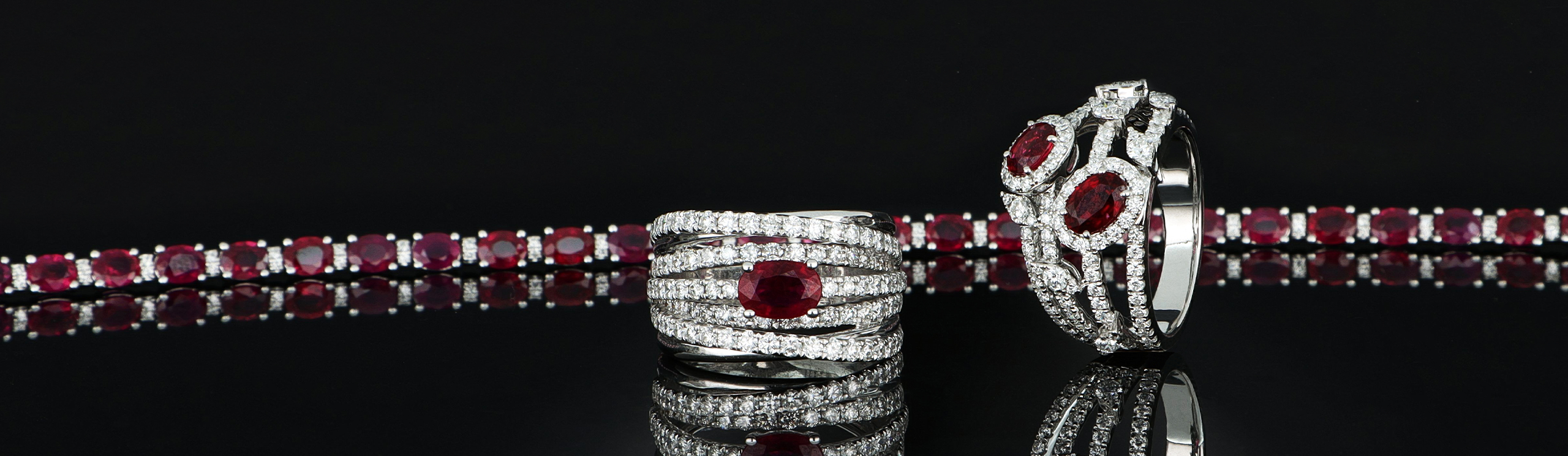
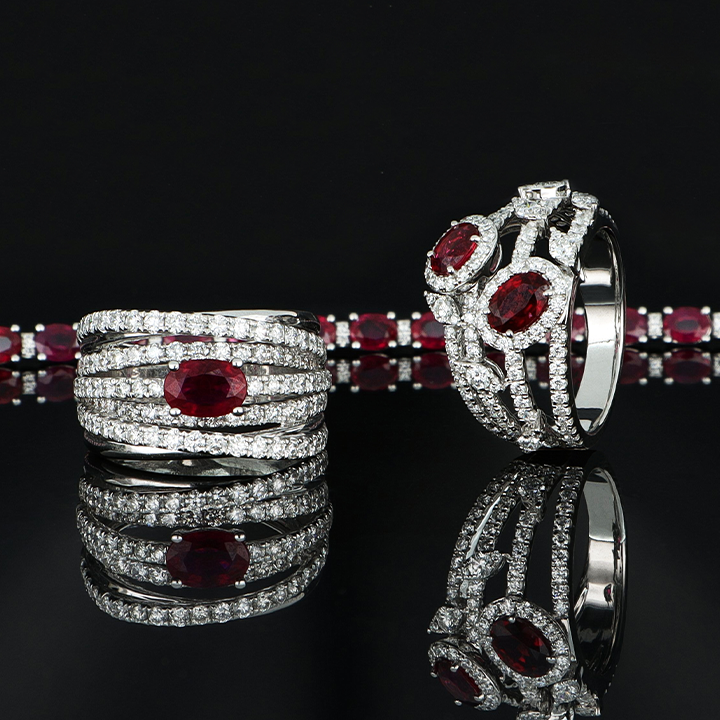
The ruby: a precious stone at the heart of passion and history
The ruby, with its deep red color and fascinating history, is one of the most iconic gemstones ! A symbol of passion , power and love, the ruby has fascinated gem lovers for centuries, mainly due to its beauty and rarity .
In this article, discover the fascinating history of this gem, as well as its unique characteristics , its role in jewelry , and also unusual facts that will surprise you!
The history of the ruby

The ruby is a precious stone that has existed for millions of years. It has traversed the ages with a deep and mystical significance . Its name comes from the Latin word " Ruber ," meaning " red ," in reference to its emblematic color .
The first historical mentions of the ruby date back toAntiquity, where it was considered a symbol of courage and protection. In Asian culture, particularly in Burma, it was believed that people possessing a ruby were protected from injury and curses.
The ancient Indians believed that the red color of the ruby reflected the heart of the Earth, and they used it as a talisman to bring strength and energy. In the Middle Ages, the ruby was also associated with nobility and royalty ,often incorporated into crowns and royal jewelry.
Today, the ruby remains a precious stone that embodies power and love, particularly in jewelry, where it is often chosen to symbolize ardent passion or deep commitment.
The geological origin of rubies
Rubies form under specific geological conditions , at high temperatures and under immense pressure , in deposits of metamorphic rocks .
Their characteristic red color comes from the presence of traces of chromium in their crystalline structure. Ruby is actually a variety of corundum, just like sapphire. Both stones are composed ofaluminum oxide, but it is the presence of chromium that differentiates ruby and gives it its red hue.
Rubies are found in various regions of the world , but the most famous come from Burma , Cambodia , Sri Lanka , and Thailand . Burmese rubies , in particular, are renowned for their vivid and intense red color , often called " pigeon's blood red ."
Where can rubies be found?
Rubies are mined in several regions of the world , but the most famous deposits are found in Asia . Burma (modern-day Myanmar ) is particularly renowned for its exceptionally high - quality rubies , especially those from the Mogok region , famous for its stones of unparalleled color and purity. Rubies are also found in Thailand , Sri Lanka , and Africa , notably in Mozambique and Tanzania .
The ruby: the birthstone for July
Just as the diamond is the gemstone of April, the ruby is the gemstone associated with July.
In astrology, the ruby symbolizes passion andenergy. People born in July are believed to embody qualities such as confidence, vitality , and inner strength. Giving a ruby to someone born in July is therefore considered a symbolic gesture, representing intense and lasting.
Are you interested in birthstones but unsure which stone corresponds to your birth month ? Find out in our dedicated article! → Article on birthstones
The main characteristics of ruby
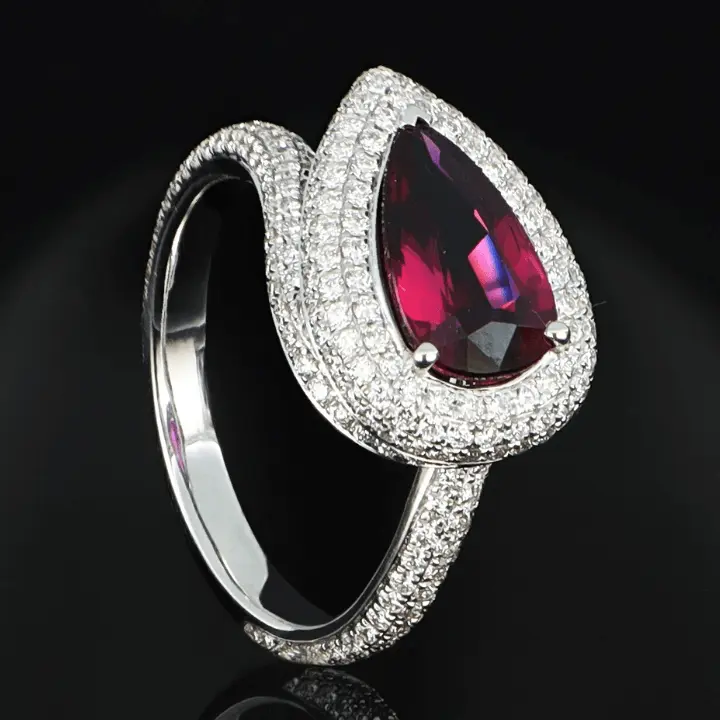

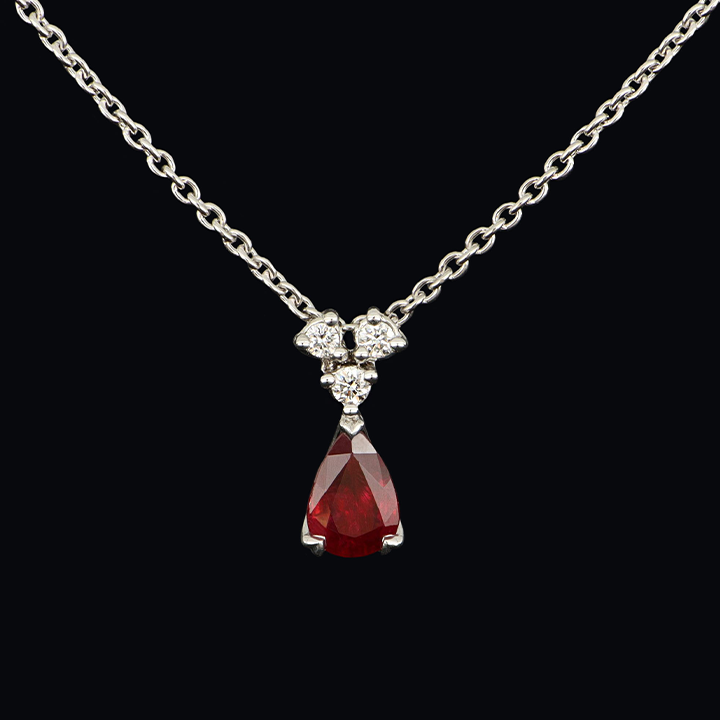
The ruby is a remarkable gemstone not only for its colorbut also for its unique physical characteristics. On theMohs scale, which measures the hardness of minerals, the ruby scores 9, making it one of the hardest gemstones after the diamond. This hardness allows it to resist scratches and wear,making it an ideal choice for everyday jewelry.
The red color of a ruby varies from light to deep red , depending on the chromium concentration . The most sought-after rubies are those with an intense color , often called " pigeon blood " because of their pure and brilliant red hue . The stone's transparency and cut also influence its value : a ruby without visible inclusions and with a fine cut will be much more valuable .
Ruby quality criteria
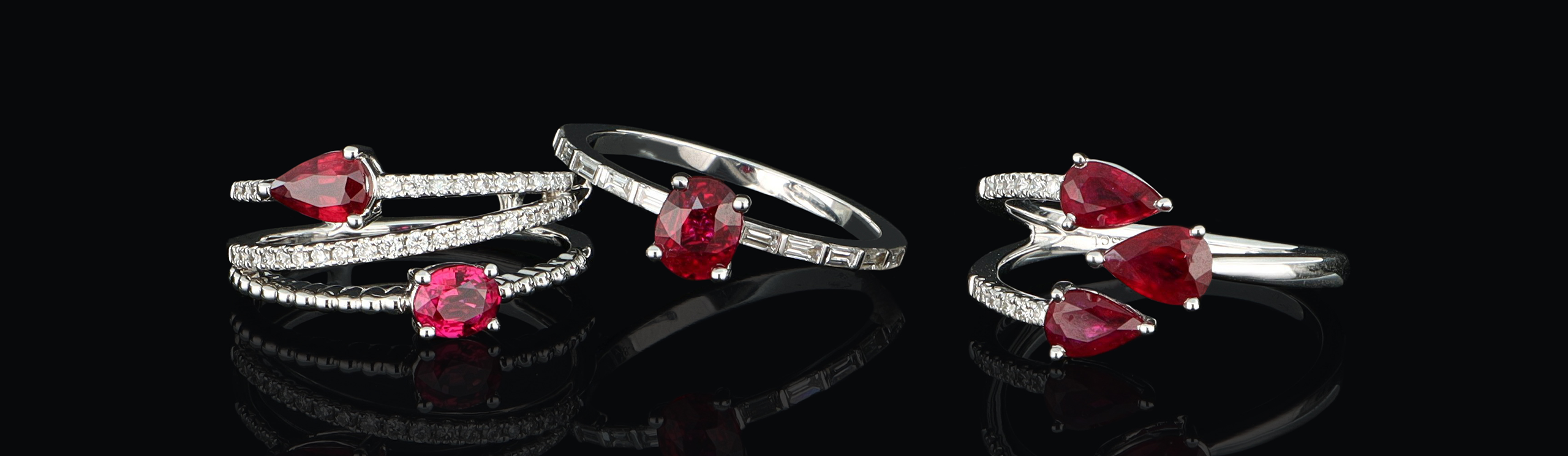
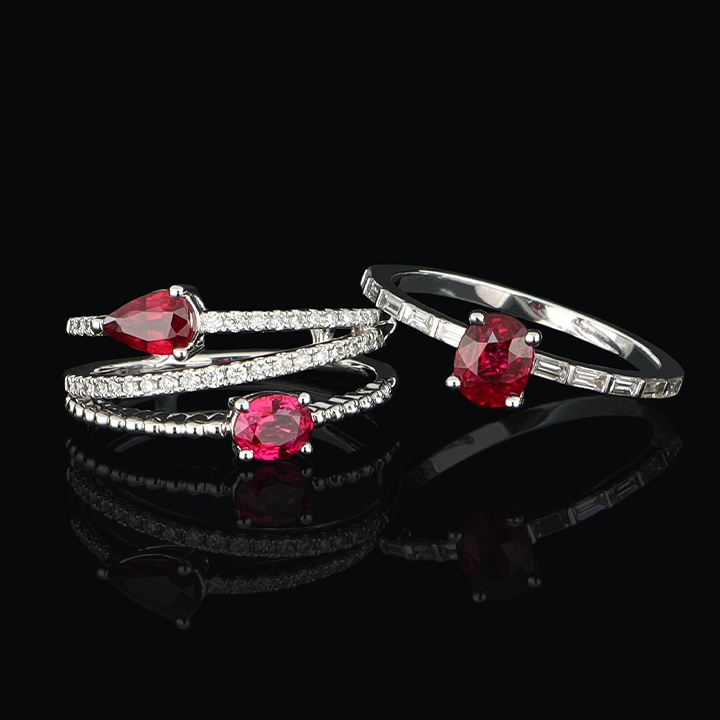
The quality criteria for rubies are similar to those for other precious stones like diamonds . They are generally evaluated according to the 4Cs : color , clarity , cut , and carat . Here are the specific criteria for rubies in detail :
Color : The ideal ruby color is a pure red to a slightly purplish red. Rubies with an intense and vivid red are the most sought after.
Clarity : Rubies almost always have inclusions , and a completely clean stone is extremely rare . Acceptable inclusions are those that do not affect the stone 's transparency or brilliance .
Cut : Rubies are often cut into oval or cushion shapes , but round and pear shapes also exist . A good cut optimizes brilliance , color , and symmetry . A poor cut can reduce the perceived color or create a shadow .
Carat (weight) : Large rubies (>2 carats) of good quality are very rare and very expensive. The price of a ruby increases exponentially with its weight, provided the quality is high.
Treatments : Heat treatments are common to improve clarity or color. This reduces the value compared to an untreated ruby, which is much more valuable.
The ruby: symbol of passion and power
The ruby is much more than just a gemstone : it embodies passion , strength , and eternal love . Its intense red brilliance and symbolism make it a coveted and precious stone , whether for personal jewelry or symbolic gifts . Whether you're looking for a timeless piece or a unique item to celebrate a special occasion , the ruby will always be an exceptional choice .
If you are looking for the perfect ruby, visit one of our stores to discover our exclusive selection and benefit from the advice of our team.
FAQ: The ruby: the gemstone of July
- What is a ruby and why is it so precious?
The ruby is a variety of the mineral corundum, just like the sapphire. It is a gemstone whose intense red color comes from the presence of chromium. It is prized for its beauty, its hardness (9 on the Mohs scale), and its rarity. The ruby has a profound meaning, being associated with passion,eternal love , and protection. - How do you recognize a quality ruby?
The quality of a ruby depends on several criteria : color (the most precious rubies are a bright and pure red , with a hint of blue ), clarity (a ruby without visible inclusions is considered more precious ), weight (the ruby is measured in carats , the larger it is, the rarer and more expensive it is ) and cut (a well-executed cut maximizes the brilliance and sparkle of the stone ). - Where are rubies Rubies are mined primarily in Asia , particularly in Burma (Myanmar) , which is famous for its "pigeon's blood" rubies . They are also found in Sri Lanka , Thailand , Mozambique , and Tanzania . These regions are the main sources of high-quality rubies .
found? - Is ruby a durable gemstone?
Yes, ruby is one of the hardest gemstones , with a score of 9 on the Mohs scale , second only to diamond . This means it is highly resistant to scratches and wear , making it an excellent choice for everyday jewelry . - Can rubies be found in different colors?
The ruby is a red gemstone, but its hue can vary depending on the concentration of chromium in its structure. The red of the gem can range from light red to intense red, and the most sought-after rubies are those with a vivid red color, often called " pigeon's blood." Some rubies may also have darker or lighter. - Is ruby fragile?
Although ruby is extremely hard, it can break if it is subjected to a sudden impact in a specific direction. Its hardness , however, makes it very scratch-resistant, so it is suitable for everyday use if handled with care.
If you have any further questions or would like to know more about rubies, please do not hesitate to contact us or visit one of our stores for personalized advice!