


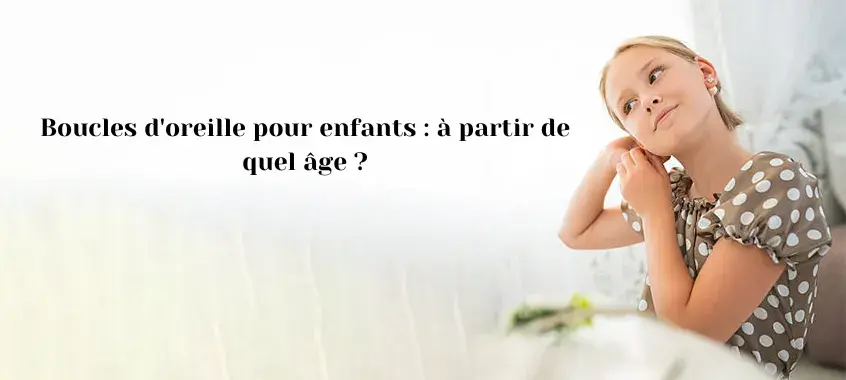
Children's earrings: At what age can you pierce your children's ears?
Are you thinking of getting your child's ears pierced? But you're wondering at what age ears can be pierced? Opinions on this question are often divided, so Bollwerk jewelers suggest you read these different tips before making your decision.
Why pierce a baby's ears?
In some countries, piercing baby girls' ears shortly after birth is a long-standing tradition. Meanwhile, in other countries, petitions are circulating calling for a ban on parents piercing their children's ears before a certain age. The issue of ear piercing for babies and children is therefore a real debate worldwide.
Furthermore, the decision to pierce children's ears or not rests with the parents. Some do it for aesthetic reasons, and others to allow their children to wear family heirlooms such as earrings, gold
However, more and more parents are reluctant to subject their babies to unnecessary pain, because just because a child doesn't complain doesn't mean they aren't in pain. Furthermore, healing doesn't always go smoothly if the child is too young to follow proper hygiene practices after ear piercing.
Is it safe to pierce a baby's ears?
Considering your child's health and well-being is important when it comes to ear piercing. As you mentioned, babies feel pain, but they can't always express it in the same way as adults. Furthermore, ear piercing in young children carries potential risks, including infections and allergic reactions to the materials used.
The recommended age for ear piercing varies according to medical opinions and practices. Some people prefer to wait until the child is at least 2 years old and has received their first vaccinations, while others recommend waiting until the age of 6, when the shape of the earlobe is more stable and the child can express their opinion.
In all cases, it is essential to choose an experienced and qualified professional to perform the piercing, using sterile techniques and hypoallergenic materials. It is also important to carefully monitor the child's ears after the piercing for any signs of infection or adverse reaction.
Ultimately, you should make the decision to pierce your child's ears carefully, taking into account their well-being, age, and ability to give consent. It is always advisable to consult a healthcare professional for advice specific to your situation.
What are the health risks for the child?
The major risks range from skin infection to the spread of microbes that could cause staphylococcus or streptococcus infections, septicemia, abscesses, or even cartilage infections. All these risks are multiplied if the wound is not properly cared for and if the equipment used for ear piercing has not been correctly sterilized. And we mustn't forget the risk of the earring being pulled out if it gets stuck.
Pain, risk of infection and allergies
For very young children, ear piercing can be painful, so it's important to have an anesthetic cream available at the pharmacy. Furthermore, piercing the skin can cause infection, as the immune system of very young children may be weaker, especially if the baby hasn't received all their vaccinations. There's also a risk of allergies, as piercing the skin barrier can cause irritation or allergic reactions due to the materials used. This is often referred to as contact dermatitis.
To avoid this, it's best to choose earrings made of 18-karat yellow gold. This metal will help limit the risks.
Where can I get my children's ears pierced?
Choosing the right place for ear piercing is essential. It's crucial to use trusted professionals, such as jewelers. Impeccable hygiene is paramount. Use sterile equipment, opened only in the client's presence. Disinfect the area before piercing. Visit our stores for this service. At Bollwerk, experienced jewelers guarantee optimal hygiene.
How long should you keep piercing prostheses or "medical earrings" in?
To prevent the skin from covering the piercing and closing it, the child will need to wear medical earrings made of surgical steel, gold, or titanium for six weeks. These earrings, also called piercing prostheses, have a rounded end, a secure clasp, and a long, thick post. These prostheses are removed only once the piercing has fully healed, and then they must be discarded. The healing period can vary considerably from person to person.
What precautions should be taken after ear piercing?
After having your child's ears pierced, you'll need to pay close attention to any signs of infection. If you notice that the earlobes are swollen, red, smelly, or have a pus discharge, you should consult your doctor. Daily care of the pierced ears will also be necessary.
After piercing, you must wait 5 days, then gently rotate the earring while applying saline solution to remove any impurities stuck to the post. The child should touch their ear as little as possible, which can be difficult for babies and toddlers.
What jewelry should you dress your child in?
Once the piercing has healed, you can choose some beautiful earrings to adorn your little one's earlobe. We recommend avoiding dangling earrings and opting for studs, which will stay in place and won't snag. If your child is old enough, you can let them choose their own earrings.
For a little girl, you can choose flowers, turtles, butterflies, dolphins, owls—the possibilities are endless. The choice of metal will be crucial; you absolutely must choose quality materials like 18-karat gold to avoid allergies.
In our jewelry store, whether online or in-store, you will find jewelry handcrafted by our artisan jewelers in our French workshops.
Article suggestion:

